
疑犯追踪
涉巴勒斯坦入联决议通过!巴总统:感谢_我的网站

A |
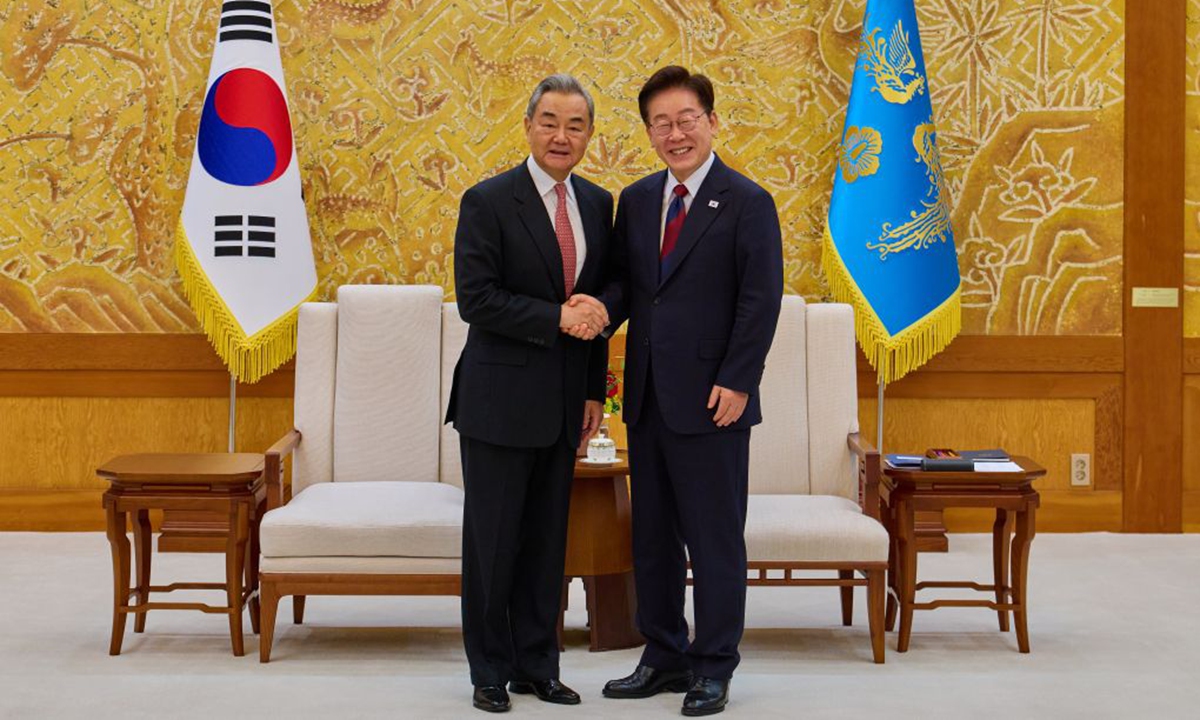
Chinese Foreign Minister Wang Yi, who kicked off his visit to South Korea on Wednesday, held talks with President Lee Jae-myung on Thursday, according to the Chinese Foreign Ministry.
The visit by Wang Yi is his first in five years since he last came to Seoul for bilateral talks with his South Korean counterpart in September 2021, according to South Korean media outlet Yonhap News Agency.
During the meeting, the South Korean president said that South Korea and China should become mutually dependent and mutually beneficial partners with complementary strengths, adding that the two countries need each other in areas such as economy, trade and security, according to the Xinhua News Agency.
Wang Yi, also a member of the Political Bureau of the Communist Party of China Central Committee, said the comprehensive restoration of China-South Korea relations and positive progress made since the beginning of this year have demonstrated that a rational, pragmatic and positive policy toward China fully serves South Korea's interests and is in keeping with the trend of the times.
During the visit, Wang also met with South Korean Foreign Minister Cho Hyun and Wi Sung-lac, South Korea's top presidential national security advisor.
Chinese analysts regard the latest senior-level engagements as "building on the past and paving the way for the future." Coming at a critical juncture amid shifting regional dynamics, it serves as a tangible follow-up to the two heads of state's efforts to restore bilateral ties and reflects the growing maturity of relations, they said.
Opportunity for greater progress
During the meeting, Lee told Wang Yi that he was glad to see China-South Korea relations improving and developing rapidly, with strong growth momentum in economic and trade cooperation. While highlighting that people-to-people exchanges between the two countries are expected to exceed 10 million this year, Lee said that South Korean public perceptions of China are improving and there are growing expectations for strengthening comprehensive cooperation with China, per Xinhua.
Lee added that he looks forward to visiting China's Shenzhen City in November for the 2026 APEC Economic Leaders' Meeting, calling it an important opportunity to work with China to advance the South Korea-China strategic cooperative partnership to a new level.
In his turn, the Chinese top diplomat told President Lee that he hopes South Korea will firmly pursue a friendly policy toward China and take the 35th anniversary of the establishment of diplomatic relations between the two countries next year as an opportunity to make greater progress in the China-South Korea strategic cooperative partnership.
Wang also noted that China is ready to share development opportunities with all countries, especially its neighbors. Amid growing global economic fragmentation and rising trade protectionism, Wang pointed out that China and South Korea should set an example by concluding the second phase of Free Trade Agreement (FTA) negotiations at an early date to promote regional economic integration and universally beneficial and inclusive economic globalization.
Since the two countries established diplomatic relations in 1992, their bilateral trade volume has increased more than 60 times. China has remained the South Korea's largest trading partner for 21 consecutive years, according to the Xinhua.
According to a Wednesday report by South Korean newspaper The Korea Herald, Seoul has also described Wang Yi's trip as an opportunity to build on the recent improvement in bilateral relations and prepare for further high-level exchanges.
Wang Junsheng, a researcher at the Chinese Academy of Social Sciences' National Institute of International Strategy, told the Global Times that this visit is anchored in key consensus forged during the reciprocal state visits by the two countries' heads of state. Wang Yi's trip can be seen as translating leaders' consensus into concrete action, and deepen exchanges and cooperation at all levels, he noted.
He also viewed the visit as encompassing coordination with Seoul on future preparations for November's APEC meeting, as Lee is expected to attend.
After previous setbacks, China-South Korea relations have recovered across political, economic, diplomatic and security spheres following the leaders' meetings, Yang Xiyu, a senior research fellow at the China Institute of International Studies, told the Global Times on Thursday.
"The highlight of Wang Yi's visit this time could be summarized as steady progress in the maturity of China-South Korea relations, laying firmer ground for expanded cooperation and difference management ahead," Yang added.
Hand in hand
On the international and regional front, Lee said that amid the current international situation, stronger strategic cooperation between South Korea and China serves the fundamental interests of both countries and is important for regional peace and stability, per Xinhua.
Wang Yi told Lee that as an important force for maintaining world peace, China consistently advocates the political settlement of international and regional conflicts through dialogue, adding that China is also a major stabilizing force, providing valuable certainty for the world.
During the Thursday meeting with Wi Sung-lac, South Korea's top presidential national security advisor, Wang Yi also expressed hope that South Korea will pursue genuine strategic autonomy, refrain from bloc confrontation or taking sides, and develop its relations with China, the US and other major countries in a mutually compatible manner, per Xinhua.
Wang Yi stressed that it is necessary to remain highly vigilant against the rhetoric and actions of Japan's right-wing forces that seek to turn back the wheel of history, and that the resurgence of Japanese militarism must never be allowed.
The Chinese top diplomat called on all parties to do more to facilitate the resumption of dialogue and restoration of mutual trust, expressing hopes that the Korean Peninsula will move toward peaceful coexistence between South Korea and the DPRK, ultimately achieving lasting peace and stability on the Korean Peninsula, Xinhua reported.
Yang told the Global Times that China is entering a new stage of development, while South Korea in effect stands at a crossroads amid shifts on regional security. For both countries, deepening cooperation is therefore of great significance, and the two sides will need to demonstrate greater political sincerity to expand cooperation and manage differences.
As long as the two sides uphold the vision of a shared future and maintain their independence, China-South Korean relations at this historic juncture can embark on a more solid, fruitful development path that benefits both nations, Yang continued.
He added that stable China-South Korea relations can reduce the risk of confrontation among Northeast Asian countries, build a solid regional cooperation framework, as well as serve as a model in the region.
Looking at the broader international landscape, conflicts persist in the Middle East and elsewhere, while protectionism and unilateralism are on the rise, disrupting and even severing global supply chains. Against this backdrop, China-South Korea cooperation is vital not only to maintaining stable regional supply chains but also to supporting stability at the global level, Wang Junsheng said.
Progress in China-South Korea cooperation will generate multiplier effects benefiting both countries and the wider region, while injecting positive momentum into the global economy amid rising protectionism, Yang echoed.
On the first day of his trip on Wednesday, Wang Yi met with Cho Hyun, who said in an X post on Thursday that they walked together along the Dasan Seongguwak-gil trail in Namsan and continued their conversation from yesterday.
"Despite the lingering late-summer heat, I hope walking along the trail — where the historical fortress wall, Namsan's lush forest, and Seoul's cityscape blend seamlessly —offered Minister Wang, an avid hiker, a memorable experience. For me, it was indeed a meaningful time to deepen our friendship too," he wrote.
Embracing China means embracing the future, and going hand in hand with China means going hand in hand with opportunities, Wang Yi said during the meeting with Lee.
。
当地时间5月10日上午,应多国要求,联合国大会第十届紧急特别会议恢复举行。会议审议了接纳巴勒斯坦为联合国新会员国议题,通过了授予巴勒斯坦更多权利的决议。巴勒斯坦总统阿巴斯当天发表声明,感谢在会议中投票支持巴勒斯坦的国家,感谢他们“对真相和正义的支持”。巴勒斯坦总统阿巴斯 图片来源:央视新闻资料图 阿巴斯:联大决议展现了世界对巴勒斯坦人民的支持阿巴斯在声明中表示,这次支持巴勒斯坦的压倒性投票展现了世界对巴勒斯坦人民自由和权利的支持,以及对以色列占领巴勒斯坦土地、侵犯巴勒斯坦人民的拒绝。鉴于这次投票结果,巴勒斯坦国将继续努力通过安全理事会的决定,获得联合国正式会员国资格,并呼吁更多国家承认巴勒斯坦国。阿巴斯呼吁美国停止对以色列的偏袒,呼吁国际社会向以色列施加压力,落实相关联合国决议,结束以色列对巴勒斯坦土地的占领,承认巴勒斯坦人民的合法权利,建立以1967年边界为基础、以东耶路撒冷为首都、享有完全主权的独立的巴勒斯坦国,地区和世界的和平稳定才能真正实现。阿巴斯同时呼吁,以色列必须尽快结束对约旦河西岸地区、加沙地带和东耶路撒冷的占领,立即从加沙地带完全撤军,向加沙所有地区提供人道主义援助,让流离失所的民众重返家园。
傅聪指出,巴以冲突几十年来循环往复,一代代巴勒斯人民失去家园,在占领之下颠沛流离,是当今世界不断撕裂、持续流血的伤口。

B |
此次表决中,共有143票赞成,9票反对,25票弃权,决议最终获得通过。美国、以色列等投票反对。该决议除了重申巴勒斯坦人民的自决权,包括建立独立巴勒斯坦国的权利,以及“两国方案”等内容外,还确认巴勒斯坦符合《联合国宪章》规定的会员国资格,建议安理会以此重新审议巴勒斯坦递交的“入联”申请——也就是说,巴勒斯坦“入联”问题被“打回”安理会重审。此外,决议决定授予巴勒斯坦更多联合国权利,包括了按照字母顺序就坐于会员国中,有权代表集团提案并介绍提案,参与联合国大会及其委员会主席团席位等。但决议明确表示,巴勒斯坦没有投票权,也不能成为联合国机构席位候选国。联大决议对会员国没有约束力,而是国际意愿的表达,但会得到联合国机构执行。
C |
4月18日,美国在安理会一票否决了关于巴勒斯坦申请成为联合国正式会员国的决议草案。巴勒斯坦目前是联合国观察员国。根据《联合国宪章》,联合国接纳新会员国,需经安理会推荐,再由联大作出决定。由于接纳新会员国为实质性议题,安理会的决定需要至少9个安理会成员同意且5个常任理事国均不反对方可通过。巴勒斯坦2011年9月就曾递交“入联”的正式申请,但未获安理会通过。
D | 2012年11月29日,联大通过决议,给予巴勒斯坦联合国观察员国地位。

E |
中方欢迎联大通过历史性决议中国常驻联合国代表傅聪在表决后的发言中表示,中方欢迎这一历史性的决议。傅聪指出,巴以冲突几十年来循环往复,一代代巴勒斯人民失去家园,在占领之下颠沛流离,是当今世界不断撕裂、持续流血的伤口。

F | 独立建国是巴勒斯坦人民的长期夙愿,正式加入联合国是这一历史进程中的关键一步。巴勒斯坦应该享有与以色列同等的地位,巴勒斯坦人民应该享有与以色列人民同等的权利。支持和推进巴勒斯坦独立建国进程,为落实“两国方案”、实现中东持久和平提供有力保障,是国际社会的共同责任。今人遗憾的是,巴勒斯坦国成为联合国正式会员国的申请于4月18日被美国在安理会无情否决。美国在巴以问题上一再使用否决权,无理阻挠国际社会为解决巴勒斯坦长期遭受历史不公所作出的努力,不符合一个负责任大国的担当。
傅聪表示,紧急特别联大以压倒性多数通过决议,重申巴勒斯坦人民拥有包括独立建国在内的自决权,确认巴勒斯坦国符合成为联合国正式会员国的资格,建议安理会重新积极审议巴勒斯坦国加入联合国的申请。中方欢迎这一历史性的决议,这反映了国际社会的人心所向。中方参加了这项决议的共提。中方支持安理会根据联大决议的要求,尽快重新审议巴勒斯坦国的申请,期待有关国家对此不要再继续拖延、设置障碍。傅聪说,决议对巴勒斯坦国参与联合国活动和有关会议作出进一步安排,赋予巴勒斯坦国新的权利和特权。中方理解,这些是在无可奈何、别无选择情况下的特殊安排,是对巴勒斯坦长期遭受历史不公的补救,是对美国滥用否决权的纠偏。中方认为,在《联合国宪章》允许的范围内作出这些特殊安排,有助于让国际社会更充分地听取巴勒斯坦的呼声,有助于巴勒斯坦在相对平等的地位上同以色列进行对话和谈判。决议明确,有关安排属于例外,不构成先例。
G | 中方相信,有关安排不会是永久的,总有一天巴勒斯坦国将成为联合国正式会员国,将在联合国同其他会员国一样享有充分、平等的权利。
傅聪强调,巴以问题久拖不决的症结在于“两国方案”没有得到落实。多年来以色列作为占领方不断侵蚀“两国方案”的基础,当前已持续7个多月的冲突更可能彻底葬送“两国方案”的前景。中方敦促以色列停止对加沙民众的集体惩罚,停止推进对拉法的军事进攻,切实消除对人道物资进入加沙的一切限制。在约旦河西岸,以色列应该停止一切定居点活动,切实遏制愈演愈烈的定居者暴力。中方将继续发挥建设性作用,为推动立即停火、重振“两国方案”,早日实现巴以双方和平共处、中东长治久安作出不懈努力。
H |
Current article:http://www.hanninhuaxituochunkui.pics/gnph8si/nq7qic.xls
Published on:10:38:19


1
“中国罗非鱼之都”茂名前7个月罗非鱼出口同比增近五成,“中国罗非鱼之都”茂名前7个月罗非鱼出口同比增近五成2
[视频]如果全球的冰都融化了 地球会变成什么样子3
इंस्टाग्राम और वॉट्सएप से निवेश का झांसा देकर ठगे 31 लाख, क्राइम ब्रांच ने तीन जालसाजों को दबोचा4
【观点】正信期货:预计短期乙二醇回调整理为主5
「スター選手が名を連ねる見込みだ」侍ジャパン、WBC連覇には韓国代表が強敵になる!? 米メディア「著名な選手を欠くものの」6
世界杯冠军球员+1!阿斯报:伯纳乌将为库库举行致敬仪式7
统筹保供和转型双向发力,煤炭工业“十五五”发展路线图明晰8
鲁媒:山东引进王岚嵚经过了两个月谈判和等待 来来回回 诚意满满9
小米更新Miui开发版本发布方案:包括小米6/混合2和其他型号10
Fun fact: Will this cloud rain?11
「1500円なのに軽すぎる」 ワークマンの“高コスパシューズ”に驚きの声 「とにかく歩きやすい!」「買って損なし」12
US Investigators Examine Bullet That Killed Reporter Shireen Abu Akleh13
想用Codex做科研,可以先从这9个Skills开始14
Adobe的人工智能原型可将物体粘贴到照片上 同时添加逼真的照明和阴影15
福建雷雨天气频繁“打卡” 闷热继续在线
- 随机推荐
1
【ダイソー】売れ続けてる商品!一度使えばリピ買いする人多数!【100均】2
民建济南市第十三次代表大会开幕3
【第777期·教研活动】聚焦游戏分享 共享教研智慧——开福区水映加州幼儿园自主游戏观察与评价教研活动4
A Gin for Every Mohammad & Maria: Indonesia Bar Loses Permit for 'Blasphemy' After Free Drinks Promo5
自媒体博主杜撰小红书“上市失败”,发布在证券投资平台!警方:造谣者已被行拘6
韩国KOSPI指数涨超1% 三星电子涨超2%7
8月24日投资日历 | 2026文昌国际航空航天论坛将于今日举办8
签留学中介合同后因突发状况退款遭宽德教育刁难9
客服无作为10
台风“白海豚”最新动态 对杭州风雨影响有调整11
航行警告!南海部分水域进行军事训练 禁止驶入12
父母腿脚不便?这些城市景点对老人友好13
WAIC2026探展|中兴通讯在WAIC放大招:OEX架构如何让国产芯片“组团”打败“单挑”?14
Sydney court postpones extradition hearing of former US military pilot until May15
风雪中坚守,撑起通信“保护伞