

一 |
当北方非遗酥皮月饼,走进全国Olé精品超市货架,属于伯香村黄庄月饼,迎来渠道发展的重要一步。从河北乡村产业带走向全国高端商超,一块地道黄庄酥皮月饼,正在被更多城市消费者看见与认可。 Olé作为国内精品超市代表,对入驻商品的原料、工艺、品控有着严苛筛选标准,注重食材本味与消费品质。 Ambuj Sonal, Associate Partner at Link Legal, a firm tracking mergers and acquisitions (M&A) and joint ventures, among others, spoke with Sputnik about cross-border investments in the era of growing uncertainty and the impact this will have on M&A activity in 2022 and beyond.,Sputnik: In the past two years, many restrictions have been imposed on foreign investments globally, mainly for reasons of national security. What effect have such regulatory changes had on cross-border mergers and acquisitions?,Ambuj: The primary reasons for implementing such additional scrutiny were to control the misuse of the uncertain situation and opportunistic investment behavior. Indeed, these restrictions affected cross-border deals globally in early 2020. For example, the European Commission Report on foreign investment flows [released in November 2021] suggested that foreign direct investment (FDI) flow to European countries declined by approximately 71 percent during the time of COVID.,Although these economies had amended regulations to protect their domestic companies from 'corporate raiders', this deterred foreign investors and caused a substantial decline in inbound M&A deals.,Having said that, the global cross-border M&A activity showed huge improvements in the second half of 2020, when most of the countries had started vaccination and adopted other measures to control the pandemic.,Reports show that from the second half of 2020, the volume of global deals increased by approximately 29 percent, and deal values soared by roughly 156 percent, indicating that cross-border M&A deals enjoyed a quicker recovery from COVID.,Sputnik: India has also amended foreign investment rules, explicitly targeting countries with which it shares land borders. How has it affected M&A activity and overall foreign investment flow, primarily from China?,Ambuj: The Indian government, in Press Note 3 (PN3) in April 2020, decreed that all investments from entities (direct or indirect) with which India shares a land border, would have to be made under the 'approval route' and would need security clearance.,PN3 also covered investments where beneficial ownership belonged to China, Taiwan, Hong Kong and Macau. Initially, investors from these nations approached the Indian Government for approval. However, the government was silent about these approvals until the first year of PN3.,According to data disclosed under a recent application filed under the Right to Information Act, the Department of Promotion of Industry and Internal Trade (DPIIT) has revealed that it received 382 FDI proposals from Chinese entities after PN3, of which 80 proposals have been approved.,The DPIIT made the commitment that appropriate due diligence and FDI approvals from Chinese entities would be scrutinized on a case-by-case basis. Before PN3, Chinese firms were actively investing in technology and e-commerce businesses in India, particularly in start-ups.,Up to 2019, India received foreign investments of approximately $3.4Bln from China and Hong Kong. However, post PN3, the total investment from China and Hong Kong has declined to $952Mln or 72 percent.,Having said that, despite COVID-19 and a huge drop in Chinese investments, India has received the highest annual FDI ($83.57Bln) in the 2021-22 financial year, and has emerged as a preferred investment destination.,The steps taken by the Indian government during the past few years have affected the increasing volumes of inbound FDI, which has led to record levels.,Sputnik: The geopolitical scenario has undergone tectonic changes because of tensions between China and the US, and the Russia-Ukraine conflict. Decoupling is a new buzzword that many say is part of de-globalization. How is this affecting mergers and acquisitions globally, especially in India?,Ambuj: 'Decoupling' refers to a situation where another country replaces a particular country in a global and extended supply chain. 'De-globalization' would constitute a step beyond 'decoupling' where activities that are performed offshore are brought back home completely.,Tensions between the US and China have caused a major drop in cross-border M&A deals for these two countries (an almost 95 percent drop from 2016 to 2020) primarily because of geopolitical, trade, and tariff uncertainties.,On the other hand, global M&A deals were badly hit because of the Russia-Ukraine conflict. According to data provided by Reuters, the Russia-Ukraine conflict caused the value of global M&A activities to plunge 29 percent in the first quarter of 2022.,The geopolitical scenario will most probably result in a complex and disrupted global supply chain. The present conflicts such as between US and China, and Russia and Ukraine have given rise to debate about whether we are heading towards 'decoupling', which might slowly lead to 'de-globalization'.,Decoupling and de-globalization will affect the global economy adversely and could result in long-standing inflation.,So far as India is concerned, the geopolitical situation has caused unexpected price rises, disrupted supply chains, and introduced other uncertainties because of blocked inventory. This has affected major sectors such as textiles, plastics, steel, pharma, Compressed Natural Gas (CNG), etc.,Although such geopolitical situations have majorly affected M&A activity in Asia, investments in India might see a rise. Mostly, the manufacturing sector could benefit, considering how easy it is to do business and the cost-effective labor in the Indian market.,Other European countries are already considering shifting their manufacturing facilities from China to India. This is a result of the Indian government's efforts to boost foreign investments, which has made India a preferred investment destination.,Sputnik: Despite unprecedented sanctions by the West, most Asian countries, including India, have carved out a space for themselves in this crisis and are maximizing their geopolitical leverage without limiting economic opportunities. Given this backdrop, do you think Asian countries will outpace their global peers in the M&A sector?,Ambuj: India has strong business relationships with Russia, especially in the defense, oil and gas, and automotive sectors.,Because of the sanctions imposed by the West, Russia has been isolated from global financial systems and trading. Therefore, strong support and implementation of such sanctions may not be viewed as a beneficial step.,So far as opportunities are concerned, India can be seen as an alternative supplier of manufactured exports to the West. However, the preference would be given to countries belonging to the Association of Southeast Asian Nations (ASEAN), ie Taiwan, Korea and Japan. This may result in major investments in Asian countries, which may exceed the western market's M&A activities in deal volume and size.,From a cross-border M&A point of view, India remains a preferred destination with an FDI of approximately $83.57Bln and 2,064 M&A deals in the 2021-22 financial year, which puts it in top spot globally. Mauritius and Singapore remain the top investors for India, and we can see India being comfortably placed as an attractive business nation.,Sputnik: Recently, a large number of western firms have announced their intention to leave the Russian market. Has this created space for Indian firms to buy assets or to invest in Russia?,Ambuj: Yes. Judging from the silence of the Indian government on the subject of sanctions, Indian firms are keen to capitalize on the geopolitical conflict as an opportunity to invest and gain a share of the Russian market. Opportunities are available mainly in industries serving the pharmaceutical, oil and gas, and manufacturing sectors.,Furthermore, since big global companies such as Apple, fast retail and Ikea have shut or kept their operations in Russia on hold, mid-size Indian companies in the retail and fast-moving Consumer Goods (FMCG) sectors are also interested in doing business in India.,Additionally, since supply chains between Russia and -European countries are blocked, Indian suppliers are looking to initiate strong trade relations by offering undisrupted supply to Russia.,Sputnik: Reports claim that Russian businesses and other big players have been looking for ways to invest their money in Asia. What kind of investment opportunities does the Indian market offer them?,Ambuj: Unlike the UK, India does not offer any scheme like a 'Golden Visa' for Russian businessmen who can trade for their residential status in lieu of multi-million investments in the country. However, investment opportunities in India remain plentiful and attractive. As India's Prime Minister said at the World Economic Forum in Davos this year: "This is the best time to invest in India.!,Over the years, the Indo-Russian bilateral relationship has developed into a comprehensive partnership that includes cooperation in several high-technology sectors.,India and Russia have projected that bilateral trade will be worth $30Bln by 2025. This will boost the India-Russia business relationship, and many opportunities await Russian investors in India.,The key areas for Russian investments to focus on in India are telecommunications, automobiles, industrial services, oil and gas, and medical/surgical appliances.,Want to know more? Check out our Koo & Telegram accounts!,Koo: https://www.kooapp.com/profile/sputniknews,Sputnik India: https://t.me/sputniknewsindia。伯香村黄庄月饼能够成功进驻全国Olé门店,既是对品牌产品力的肯定,也标志着这一地域特色糕点正式接轨国内高端零售市场。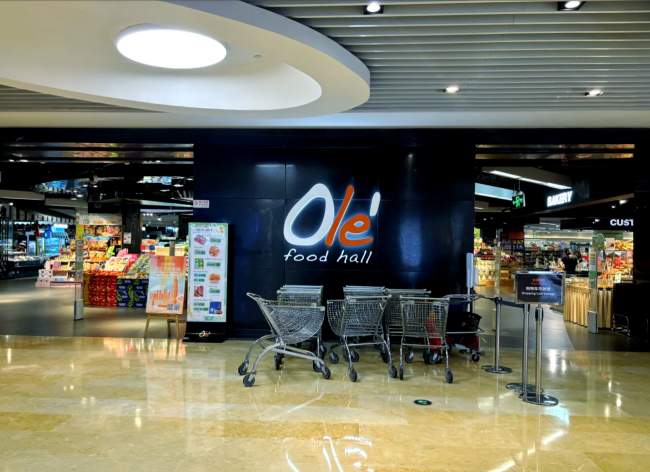 扎根黄庄月饼的百年传承,伯香村坚守非遗酥皮制作技艺,层层擀卷开酥,饼皮一碰掉渣,还原老式月饼独有的酥香口感。在产品打磨上,坚持真材实料,严控原料溯源,不添加防腐剂,依靠成熟生产工艺锁住风味,兼顾口感与饮食健康,契合当下消费者对干净配料、传统风味的追求。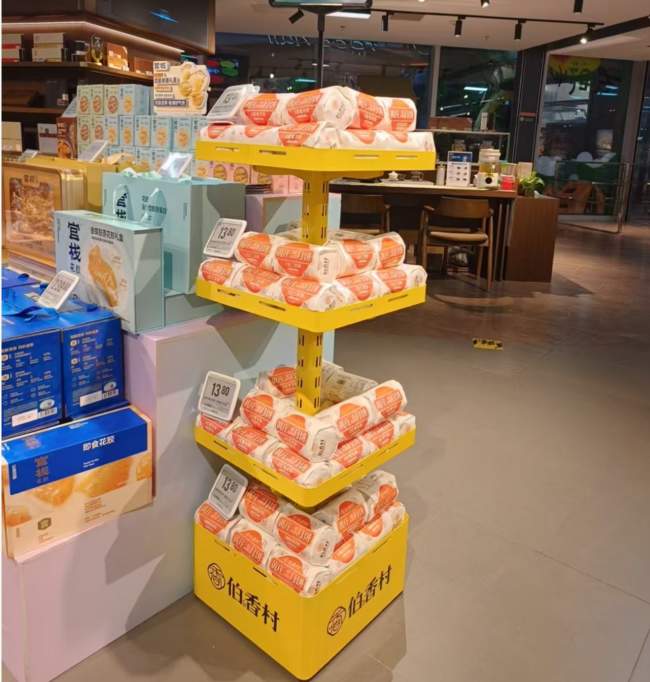
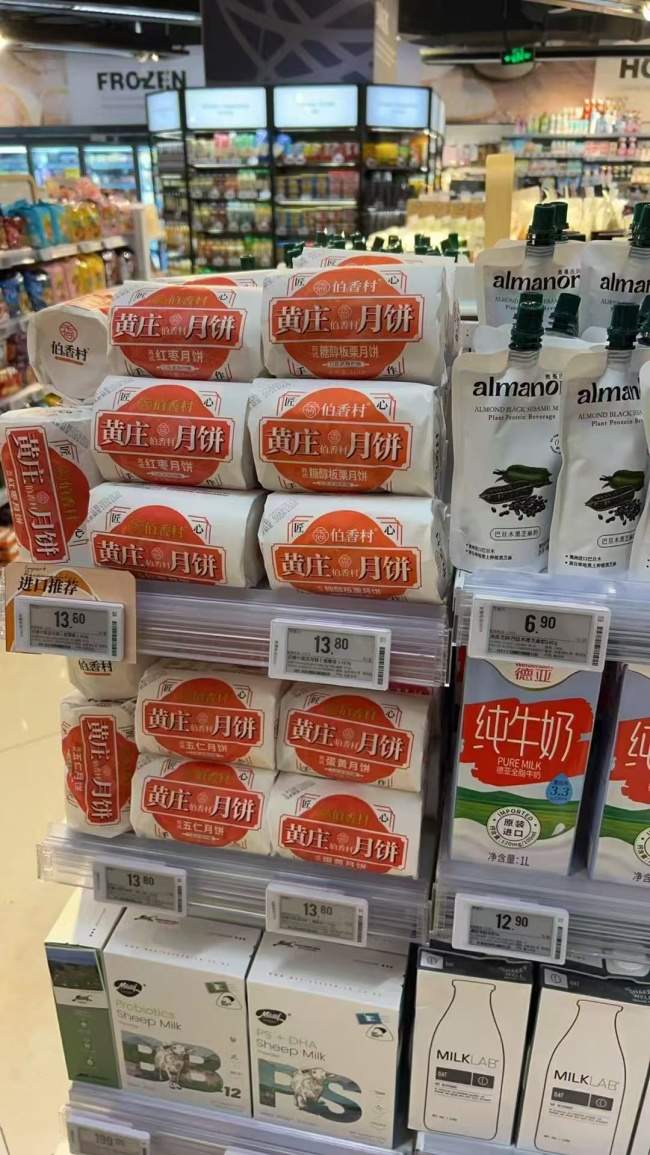 此次上架Olé,经典口味悉数亮相。醇厚饱满的五仁,坚果香气浓郁;咸香绵长的椒盐,回味十足;绵密沙糯的蛋黄,咸甜平衡;山楂酸甜清爽,消解甜腻;红枣温润香甜,枣香醇厚。

二 | 兼顾长辈、年轻群体不同口味偏好,无论是家庭日常茶点,还是中秋佳节选礼,都有合适选择。 过去,黄庄月饼更多活跃在华北本地市场与线上渠道。如今登陆全国Olé精品超市,线下实体货架打通南北市场,让全国各地消费者不用远赴河北,就可以近距离感受北方酥皮月饼的独特魅力。线上与辉同行、东方甄选、白小白等头部主播接连带货,热度持续走高,线下高端渠道全面突破,再叠加此前韩国出口订单落地,伯香村实现国内高端商超与海外市场双向发力。 一块小小的月饼,承载着乡村产业的向上力量。伯香村依托标准化生产基地,把乡土老味道标准化、品牌化,走出一条传统技艺现代化发展之路。老味道不固守旧格局,传统糕点也能适配现代精致生活。中秋将至,走进Olé,便可邂逅这份来自伯香村的酥香中秋滋味。
Current article:http://www.hanninhuaxituochunkui.pics/news/20260826_21284.htm
Published on:02:11:12


