


终结者2
China's AI-powered 'flying lifebuoy' joins water rescue toolkit_我的网站

A |
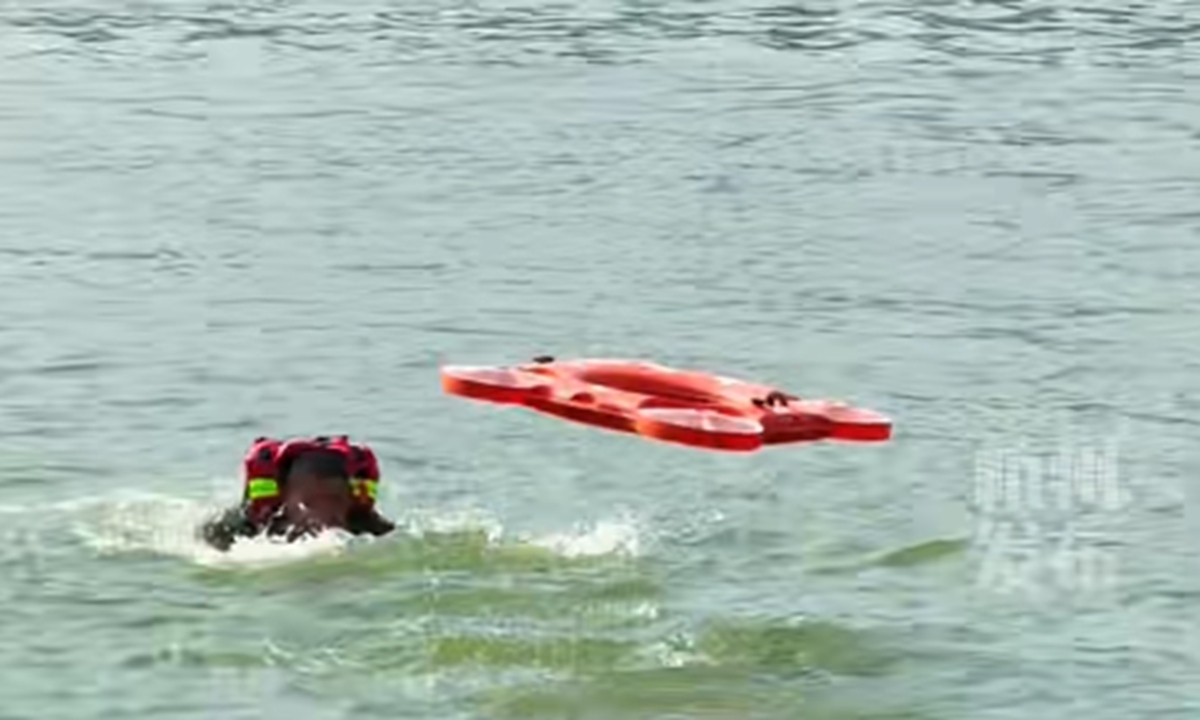
According to a report posted on the official WeChat account of Hangzhou, an orange lifebuoy took off from the shore during the drill, flew toward a person who had fallen into the water, and landed on the water surface. Even when the person climbed onto it, the device remained stable and continued to float.
Minutes later, rescuers arrived and brought the person to safety. The lifebuoy then took off again and returned to its original location.
The device, officially called an AI intelligent flying rescue robot, is designed to provide rapid assistance in open waters where rescue boats may take time to arrive. Equipped with an autonomous navigation system, it can fly to people in distress, provide buoyancy support, and return automatically after completing its mission.
The drill featured multiple water rescue scenarios and tested several intelligent rescue technologies. Drones were used to drop inflatable lifebuoys above people in distress, which quickly inflate upon hitting the water to provide temporary buoyancy.
Another system combined an unmanned boat and drone for rescue operations in dangerous waters. The drone searches and locates people in need, while the boat navigates autonomously to assist the rescue. The drone can also provide lighting for nighttime searches, according to the report.
Chinese Foreign Ministry spokesperson Lin Jian highlighted in a social media post on August 14 that the AI-powered device is "technology that could help save lives."
Global Times
。

The case dates back to June 2023, when the US DEA, operating under the Department of Justice, notified China's MPS of an arrest involving a Chinese national charged with trafficking sensitive chemicals. The MPS subsequently directed public security authorities in Hubei to launch an investigation.
Further investigations found Xia and his son had sold and shipped large quantities of non-scheduled precursor chemicals overseas.
Beginning in May 2021, the two suspects registered several shell trading companies and hired employees to fabricate information about the companies' production, business and transportation capabilities on domestic and overseas websites.
They posted large numbers of advertisements for non-scheduled chemicals, sourced the products domestically after receiving orders from overseas buyers, and shipped them abroad through international freight forwarding companies, according to the CCTV report.
During a two-year investigation, police found that some of the chemicals sold by the duo included stimulant substances controlled under Chinese regulations.
The court found that Xia and his son organized others to illegally sell controlled stimulant substances in 123 transactions between November 2021 and July 2024, with total sales exceeding 1.69 million yuan ($235,000).
On August 14, 2026, the court convicted both defendants of illegal business operations, sentencing Xia to six years in prison and his son to five years and six months. Both were also fined.
Police reminded companies and individuals engaged in chemical trading and export businesses to strengthen their legal awareness, strictly comply with relevant Chinese and foreign laws and regulations, and follow warning notices issued by China's national anti-drug authorities in August 2019, November 2023, November 2025 and May 2026 to guard against legal risks.
Global Times
。
Current article:http://www.hanninhuaxituochunkui.pics/news/20260826_3058.pptx
Published on:03:48:41